Wednesday, August 18, 2021

Happy 90th birthday, Mary!

Today is the 90th birthday of our friend, Mary Carnahan. She and her husband, John (who turned 90 a couple of years ago) have been friends of mine for something like 45 years. Their son, Paul, and our daughter, Betsey, were in high school together at Brattleboro Union High School back in the 1970s; they were both on the debate team and I think dated some too, and that brought the two families together and a friendship was formed. We learned early on that Mary and John were married on Long Island the week before Shirley and I were married, back in August, 1955 (we were married not far away on Staten Island), and we remembered how hot it was that day because we had been at the wedding of a Wellesley friend of Shirley's on that day and everyone was wilting. When Shirley was minister of the Guilford Church, she and I regularly got together with John and Mary on Friday evening to have supper and watch Washington Week in Review (that was back in the era when Paul Duke was the moderator - for years and years). It was a great way to unwind at the end of the week, and Shirley didn't have to worry about sharing experiences with a couple that had no connection with the Guilford church - but in addition, they could share news of the Episcopal Church in Brattleboro where they were active. There was a longstanding tradition that on the Fourth of July we would watch the parade downtown and then go to the Carnahan's afterward for refreshments. Both their daughters, Susan and Sarah, were involved in Betsey and Rob's wedding and we were involved in Susan's wedding. There were lots of occasions where we gathered at their house or they gathered at ours. When Shirley died, and I met and then married Ellen, she met the Carnahans and came to love them as I do. We haven't seen as much of them during the pandemic as I would have liked, but hopefully we will still have opportunities. It is a long and lovely friendship. Happy Birthday, Mary! 

                                        The Crockett family and the Carnahan family.

                            Front row, l. to r.: Paul, Susan, Sarah, Eve (Paul's wife), Shirley

                            Back row, l. to r.: Mary, Betsey, Rob, Me, John and John. 


This picture was taken in our living-room back in the 1980s. Shirley, and both Sarah and Betsey, have died since this picture was taken. We miss them so much! The painting on the wall behind us was created by our friend, Arleene Sweet, who was the wife of my college roommate, David Sweet. 


Later:

Ellen and I went by the Carnahans home with birthday cards for Mary late this afternoon. We found them both at home, and they had big news: they are moving! With the help of their son, Paul, who lives in Montpelier with his wife, Eve, they have decided to go into an independent-living community in Randolph, VT, which is about a half-hour from Montpelier. The plan is to move in late October. So they are busy downsizing and preparing their large home for the real estate market. That is huge news. I am happy for them, but sad to see them leave. I have every hope that we can visit them from time to time. They plan to have a Zoom family gathering this evening. 


Mary and John about 23 years ago

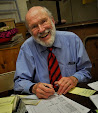
Mary on her porch this afternoon. A young 90-year-old!
We wish Mary and John the very best as they prepare to make the big move! 


Tuesday, August 17, 2021

Adventure (unsolicited!)

I'm sitting behind the Guilford Church with a dead battery in the car. I parked here to work on sending out a series of emails and inadvertently left the headlights on. Ran down the battery and can't start the car. I've called AAA. So, here I sit! They said maybe 45 minutes but at least by 4pm - that was in two hours when I called. Oh well! I can use the internet while I wait! 

Later:

AAA came at about 3:10p.m. Not too bad. I'll get home a bit after 4pm. 

Monday, August 16, 2021

Like new!

We have our car back. Our 2011 Subaru Impreza, which, as you may recall, was damaged when a pickup truck backed into us in the post office parking lot in Alpine, Wyoming back in June. While we were at it, we had them replace the front bumper which had been damaged repeatedly over time. So now it looks like new! 


 It will be interesting to see how long we can keep it looking this good!

It just keeps on being busy!

I just got back from a routine Dr's appointment with Dr. Jesper Brickley. Nothing surprising; did some  blood work, etc.

This past weekend was again very full. We went to Marlboro again Saturday  and then Saturday evening we had a movie night with Tom and Nancy Ragle. We saw Meet Joe Black,  a late 1990s film starring Anthony Hopkins and Brad Pitt. In a way, it was a sequel to The Seventh Seal, in that it continued the theme of death coming for someone, but this time "Death" was played by Brad Pitt! It's actually a great movie, despite the fact that it was a critical and box-office flop!  Watch it, if you can. 


Brad Pitt and Anthony Hopkins in Meet Joe Black

Sunday we had in-person church outdoors at Guilford and we sang in the choir. A really lovely service which featured storms and boats, and singing "Oh Peter, Don't Be Afraid!" (referring to the disciple Peter trying to "walk on the water").   Then in the afternoon we went to Westminster-West Church for an outdoor Village Harmony concert, six teens and three adult leaders. It was great to see and hear Village Harmony again after the pandemic shut everything down last summer. We saw a lot of friends there. The concert was the usual mix of African, Georgian, Shape-note, Balkan, etc., songs.

Village Harmony Concert


Then in the evening, we went back to Marlboro, but not to Persons Auditorium, but to the area outside the church, for a concert by Zara Bode and her  Little Big Band. Zara Bode is the wife of Stefan Amidon (son of our friends Peter and Mary Alice; Stefan is percussionist in the Little Big Band), and she sings old pop classics like Undecided Now, and Our Love Is Here to Stay. It was a beautiful evening, maybe a little on the chilly side, but delightful, Zara and her band were great - they don't write lyrics anymore like the ones we heard. 

Stefan Amidon and Zara Bode, downtown Brattleboro

Zara singing with her band

Zara Bode and her Little Big Band last night

This just came in - our friend Rachel Johnson was sitting next to us and took this pic and just emailed it to me. I had forgotten to bring the iPhone. 


Life is full and we are having a great summer!

John and Cynthia made it into Canada and are settled into a little cabin on Grand Manan. Judging from their accounts, it was utterly exhausting getting there, having to go through so many hoops because of COVID, but they made it and I hope are getting some good rest. Here is a photo of their cabin that they sent:

John and Cynthia's cabin on Grand Manan Island in the Bay of Fundy


Friday, August 13, 2021

A full day at Marlboro

Ellen and I are both at Marlboro for the day, starting at 9:00a.m. and going until 5:30p.m.


Here is the schedule:


Friday, August 13 

9-10am: Schumann Piano Trio in G Minor, Op. 110 

10-11am: Bridge Three Songs
11am-12pm: Mozart Piano Quartet in E-flat Major, K.493 

12-1pm: Brahms Liebeslieder Walzer 

2:30-4pm: Dvořák Serenade
4:30-5:30pm: Bartók String Quartet No. 3
5:30-6:30pm: Stravinsky Three Songs from Shakespeare 


All schedules at Marlboro are subject to change, but as it now stands, three of these pieces are not included in the Saturday or Sunday concerts this weekend: the Schumann Piano Trio, the Mozart Piano Quartet. and the Bartok String Quartet.  We've never been clear about why this is the case, but it may be that these three pieces are still in the running for being included in the weekend concerts and a last-minute decision will be made about including one or more of them.  Since the Schumann is not on the printed schedule for the weekend, however, the notes prepared for those concerts do not include anything about that piece, including the names of the performers. So I'll have to see if I recognize them. 


Later:

Ah, the pianist has come out and I would say that it must be Janice Carissa, whom we heard at the end of July in the Faure Piano Quartet. She is Indonesian, and studied at the Curtiss Institute. I do not immediately recognize the violinist or the cellist. 


Janice Carissa


Later:


We heard some good sections of the Schumann but not the whole piece. What we heard was beautiful!


Coming up next is Frank Bridge, Three Songs. The mezzo is Rebecca Printz, the violist is Jing Peng and the pianist is Lydia Brown. 


Frank Bridge (1879-1941) 
Frank Bridge, Three Songs for Medium Voice, Viola and Piano:  Far, far from each other, Where is it that our soul doth go? and Music when soft voices die. (1906/7).


"The first performance of the three songs in December 1908 marked a rare occurrence, as Frank Bridge played the piano part himself. Far, far from each other is the most ambitious of the three pieces for all three musicians. The words are excerpts from Matthew Arnold’s ‘Empedocles on Etna, and Other Poems Parting’. Where is it that our soul doth go? is the shortest of the three songs and the words are a translation of the last stanza of Heinrich Heine’s Clarisse, translated by K. F. Kroeker. While the first two songs are original settings, Bridge first wrote Music when soft voices die for High Voice, Piano and Cello in 1903. The present version was transcribed in 1907. Music when soft voices die: the short poem providing the words for this piece is one of the most influential and well-known of Shelley’s works."


Here is Shelley's poem:


    Music, when soft voices die,
    Vibrates in the memory—
    Odours, when sweet violets sicken,
    Live within the sense they quicken.

    Rose leaves, when the rose is dead,
    Are heaped for the belovèd’s bed;
    And so thy thoughts, when thou art gone,
    Love itself shall slumber on.

These are very touching songs, quite somber in tone. 


Later:
Now, it's the Mozart Piano Quartet. Looks like Jonathan Biss at the piano. The string players I do not recognize, but they are all men. I think this is the first group we have heard composed entirely of men. 
This is, of course, a delightful piece of music. 

"Typically of Mozart in E flat, the Quartet K493 is a far more mellow and genial work with, in the first movement, something of the relaxed grandeur of the recently composed E flat Piano Concerto, K482. As in the concerto, the first movement has an almost reckless profusion of lyrical themes, which expand and proliferate at leisure. Most pervasive and influential is the theme that establishes the dominant key, B flat, initiated by the piano and immediately echoed by the violin. This idea fertilises the whole of the widely modulating development (moving from B flat minor and D flat major as far afield as D minor), where strings engage in close imitative dialogue against a background of rapid keyboard scales and arpeggios—a common texture in Mozart’s piano concertos. When this theme reappears in the recapitulation on violin and viola, with the cello following in imitation, it again starts in B flat—all wrong for this point in the movement—before the piano smoothly restores the home key of E flat. This ‘wrong key’ entry in the recapitulation demands a resolution in the coda, where the strings reiterate the theme in three-part canon with the simplest tonic and dominant harmony. 

The A flat Larghetto, in full sonata form, shares the warmth and chromatic richness of the G minor Quartet’s Andante. But it is a more intense, less decorative, movement, with an impassioned development that begins with a dramatic re-interpretation of the opening phrase—a moment echoed, with another new twist, at the start of the coda. Mozart’s sketches reveal that he discarded two drafts of the finale’s gavotte-like theme before arriving at a version that satisfied him. Again there is an abundance of graceful and piquant melody, though the movement’s chief protagonist is an idea that at first seems to be merely transitional: a brusque unison for the three strings answered by a pleading syncopated phrase on the piano. This idea is rarely absent for long, chromatically expanded just before the initial return of the main theme and, in an echo of the first movement, sounded in close canonic imitation in the coda."

I guess there is an art to writing these descriptions of a piece of music. I have to sort of smile at them though - there is something about them that is sort of absurd. 

The four men are having a lot of fun with this piece and there is a lot of banter and chatter in between movements. 

Later:

It is now almost noon, and the Mozart has been played through and they are now just working on some specific passages. Jonathan Biss is an incredible pianist. He has arpeggios in this piece that are just amazing - so smooth and effortless, up and down the full-length of the keyboard over and over. 


Coming up at noon: the Brahms Liebslieder Waltzer, which I love, and which I know pretty well, because I have sung them. Can't wait! Ellen heard them yesterday and said they were electrifying! 


Later: (2:25p.m.)

The Liebeslieder Walzer was great! I sat up closer with Ellen (I usually sit in the back so that my laptop doesn't distract anyone) and it was fantastic. The vocal quartet is the same one we have heard several times now and they are really good - they have gotten so accustomed to each other that all their attacks and releases are perfect. 


We had a little picnic lunch under a tent where there was shade and it was lovely despite the heat - there was a nice breeze. I even had a chance to go through my exercises. 


And now we are in for a real treat - the Dvorak Serenade for string orchestra. A real favorite. 


"1875 was a fruitful year for Dvořák, during which he wrote his Symphony No. 5, String Quintet No. 2, Piano Trio No. 1, the opera Vanda, and the Moravian Duets. These were happy times in his life. His marriage was young, and his first son had been born. For the first time in his life, he was being recognized as a composer and without fear of poverty. He received a generous stipend from a commission in Vienna, which allowed him to compose his Fifth Symphony and several chamber works as well as the Serenade.

Dvořák is said to have written the Serenade in just 12 days, from 3 to 14 May. The piece was premiered in Prague on 10 December 1876 by Adolf Čech and the combined orchestras of the Czech and German theatres. It was published in 1877 in the composer's piano duet arrangement by Emanuel Starý in Prague. The score was printed two years later by Bote and Bock, Berlin.

Dvořák's Serenade for Strings consists of five movements:

With the exception of the finale, which is in modified sonata form, each movement follows a rough ABA form. It is believed that Dvořák took up this small orchestral genre because it was less demanding than the symphony, but allowed for the provision of pleasure and entertainment. The piece combines cantabile style (first movement), a slow waltz (second movement), humorous high spirits (third movement), lyrical beauty (fourth movement) and exuberance (fifth movement).[1]


Forty-one string players performing the Dvorak Serenade -  no conductor!


Wednesday, August 11, 2021

A quick report

We got a text from Katie today saying that she had a good meeting with her team members at her work today and feels much better about her job as a result. And we heard from John and Cynthia that they made it into Canada and were on the ferry to Grand Manan, tired but happy. Praise God! We will take comfort in these positive messages. Tomorrow I will stay home and Ellen will go to Marlboro with a woman friend in the afternoon.  Our car's body work should be finished tomorrow.

Back at Marlboro for the final week

We saw Katie off yesterday and received a text from her this morning saying that she arrived home. She was delayed 3 1/2 hours in Atlanta, so she got home really late - after 1 a.m. I think! I am so glad to know she made it home safely. But she must be exhausted. 

Today, Wednesday, we are back at Marlboro. We just heard a piece by Gyorgy Kurtag, Einige Sätze aus den Sudelbüchern Georg Christoph Lichtenbergs (1996/1999), for soprano and double-bass. I don't know who the soprano is today, but the double bassist is William Langlie-Miletich, whom we have heard before. This piece is being performed tonight at a concert in the dining-room for the Festival community. In other years we have been able to go to those Wednesday-evening concerts, but I think the pandemic has closed them to the public this year.  So there is no written information available about the participants. Here is a paragraph about the work:

"The polymath, naturalist and aesthetician Georg Christoph Lichtenberg (1742-1799) is an interesting figure of 18th-century German cultural history. Yet his most important work, his collection of aphorisms, only appeared posthumously. It embraces almost all the themes that concerned the thinkers of the era, often with a satirical tone. Kurtág selected texts from these volumes for his work, which in its original version (op. 37, 1996) was indeed a musical aphorism collection freely assembled by the performer - this version was withdrawn. However, the final form, composed in 1999, cannot be disjoined. It is a unified composition, although the material for the vocal score remained almost unchanged. Some pieces are purely aphoristic snapshots, yet by means of virtuoso double bass accompaniment, notwithstanding their brevity, are movements of great format. Thus the work can be placed beside Kurtág's major vocal cycles: it is akin to his Kafka Fragments, op. 24 and Attila József Fragments, op. 20 series, but is perhaps closest to Eszká-emlékzaj (Remembrance Noise), op. 12 duo for soprano and violin. Despite the short movements, the form is not fragmentary: the building blocks of the individual pieces of the closed unity within the cycle, even if in character they are different, in this respect echo the shaping principles of the early instrumental pieces (op. 1-5) in Kurtág's oeuvre. "


Gyorgy Kurtag (1926 -    )

"György Kurtág was born in Lugoj in the Banat region of Romania, to Hungarian parents. He became a Hungarian citizen in 1948, after moving to Budapest in 1946. There, he began his studies at the Franz Liszt Academy of Music, where he met his wife, Márta Kinsker, as well as composer György Ligeti, who became a close friend. His piano teacher at the academy was Pál Kadosa. He studied composition with Sándor Veress and Ferenc Farkas, chamber music with Leó Weiner, and theory with Lajos Bárdos, and graduated in piano and chamber music in 1951 before receiving his degree in composition in 1955. He married Márta in 1947 and their son György was born in 1954."

To say that this piece is unusual would be a vast understatement. First of all, there can't be many double-bass/soprano duets in the literature. Secondly, like many pieces by Kurtag, this is a series of very short outbursts.  The double-bass player must be thrilled to have a piece like this to play because it uses the instrument in an astonishing way. There is a lot of bowing and plucking, of course, but other things as well! At one point, the soprano came over and turned one of the screws that controls the tension on a string.  I had never seen that done before!  It is a fascinating piece! Kurtag is exploring new territory musically, for sure. If you are curious, you could find it performed on YouTube, I'm sure. 

Later:

We are now going to hear Three Songs from William Shakespeare by Igor Stravinsky. This will be performed this coming Saturday, so I know the names of the musicians: Rebecca Printz, mezzo-soprano; Marina Piccinini, flute; Bixby Kennedy, clarinet; Zhanbo Zheng, viola. 

"Stravinsky's Three Songs from William Shakespeare, for mezzo soprano, flute, clarinet, and viola (1953) were his first songs since the Four Russian Songs of 1919. While he had set texts in English before, most recently in his opera The Rake's Progress (1948 - 1951) and in his Cantata (1951 - 1953), the Shakespeare settings were the first art song settings Stravinsky had made in English. The first song, "Musick to heare," uses the text of the Eighth Sonnet; the second, "Full Fathom Five," is Ariel's song from The Tempest, and the third, "When Dasies Pied," is the cuckoo's song from Love's Labour's Lost. The harmonic language of the Shakespeare Songs balances tonal implications with limited serial techniques. Thus while the melodic line of "When Dasies Pied" implies first A flat major and then C major, the accompaniment lines describe a series of four-note tone rows and their permutations. The music itself is dry to the point of aridity and nowhere near as effective as Stravinsky's moving setting of Dylan Thomas' "Do Not Go Gentle Into That Good Night" of only a few months later, from In Memoriam Dylan Thomas (1954)."

Later:

This afternoon, we are hearing Anton Webern's String Quartet (1905). David Orvek writes, "Anton Webern’s String Quartet (1905) lies at a pivotal point in his career. While most scholars to date (including Webern himself) have tended to view this quartet as a mere stepping stone toward Webern’s later atonal language, Sebastian Wedler  argues for the interpretation of the work on its own terms as an instance of an altogether different path that Webern later abandoned. In particular, Wedler focuses on Webern’s treatment of sonata form. Where Wedler argues for understanding the quartet’s significant sonata deformations as the way in which Webern engages with the sonata rhetoric of the early twentieth century, however, I argue that it is in these deformations that the quartet most points towards the future."

Webern was in a circle of  composers such as Arnold Schoenberg and Alban Berg, known as the Second Viennese School,  who explored atonal music. This early work is transitional and has some very beautiful moments. 

Anton Webern (1883-1945)

Coming up next is a Piano Quartet in E-flat Major by Dvorak, which I expect will be gorgeous. Kai Christiansen writes, "While Dvořák is not typically mentioned along with Mozart, Beethoven, Schubert and Brahms as the chief dominating masters of classical and romantic chamber music, he belongs in this group. He composed prodigiously and masterfully in the genre turning out dozens of string quartets, piano trios, the magnificent piano quintet and two fine piano quartets. Dvořák's music is grounded in the classic forms and the finest procedures while projecting a unique personality throughout. Dvořák is often compared with Brahms as the latter was a mentor and champion of the former and their proximity of time and place inclines their music towards a similar style. Yet Dvořák is in many ways is closer to Schubert who was one of Dvořák's idols. Together, they possessed a profound gift for lyricism, romantic sweep, and an exquisite artistry for tone, color and texture that makes their music sound positively enchanted. A final comparison with Schumann shows that both composers produced a brilliant piano quintet followed swiftly by a piano quartet of equal magnificence yet destined to remain somewhat in the shadows of its older, bigger sibling."
This quartet has four movements - can't wait!
Later: Well, they didn't play it through. They rehearsed portions of movements in no apparent order. We heard some beautiful fragments! Sort of a teaser. And unfortunately, this is the only rehearsal of this piece. It is not being played this weekend. Maybe it was on the concert program in the dining hall tonight. We will get to hear another Dvorak piece, his Serenade, on Thursday,
Performing the Kurtag piece for soprano and double-bass

Performing the Stravinsky Songs

I didn't get a photo of the group performing the Webern Quartet.

Performing the Dvorak Piano Quartet

The last piece of the day was Samuel Barber's Summer Music

This piece was for a wind ensemble: flute, oboe, horn, bassoon and clarinet. We got to hear the amazing Marina Piccinini, flute, again. This was a very nice piece. 

A very satisfying day!