Monday, March 3, 2014

Ukraine Is Not a Brothel

DAY SEVEN (continued): Our final film on Friday - showing at 10p.m. - was Ukraine Is Not a Brothel, directed by Kitty Green. This is a film with an agenda. It is about a radical group of women in Ukraine called Femen, who are protesting the role and image of women in Ukraine. Women are demeaned and often coerced into prostitution to satisfy the demands of a sex tourist industry. Here is part of a review from Variety by Leslie Felperin:

-->
Debutante Aussie helmer  (i.e. a film director) Kitty Green strips away spin and half-truths to reveal the complex story of FEMEN, the Ukrainian feminist group famous for its topless protests, in Ukraine Is Not a Brothel. The big reveal in this fascinating documentary, that Femen was effectively run for years by a sinister if charismatic man — Victor Svyatski, interviewed here — has already made headlines around the world, which surely won’t hurt the pic’s commercial prospects. But that shouldn’t distract from the fact that Green also offers a nuanced, thoughtful portrait of courageous if sometimes muddle-headed women fighting on the side of the angels. Structuring the story around face-to-face interviews with a number of the Femen collective’s key players, particularly longstanding members Inna Shevchenko and Alexandra “Sasha” Shevchenko, Green doesn’t try to disguise how embedded she was among the women while shooting the film. Her voice, speaking fluent Ukrainian, is often heard off camera asking questions, and clearly the Femen-ists grew to trust her deeply over the 14 months she spent living among them.

This film dealt with a real and urgent issue, but the film itself left us disappointed. The "expose" that Femen was being led and manipulated behind the scenes by a domineering man, Victor, distracted from the main point of the film. Victor, in an on-screen interview, proves himself to be a creep. The protesting, topless, women are outrageous. Part of the time you are wondering if they have chosen the best way to make their point; other times you have to concede that they are certainly getting the attention of the media and the population through their methods. One of the leaders of Femen appeared with director Green after the showing, and revealed that the group had dumped Victor and was now based in France. The current revolution in Ukraine, they feel, owes something to their pioneering efforts.

Tim's Vermeer

DAY SEVEN (continued): The next film we saw on Friday was stunning. It was titled Tim's Vermeer, produced and directed by the famous illusionist duo,  Penn and Teller. Here is a description of the film from the Detroit Free Press of February 28, 2014, written by Claudia Puig of USA Today:

Soft-spoken Texas-based inventor Tim Jenison lies awake at night obsessed by one thought in the compelling documentary Tim’s Vermeer. “All I can think about is this goal of trying to paint a Vermeer,” Jenison said. “It would be pretty remarkable if I can — because I’m not a painter.” The subject of his obsession is 17th-Century Dutch master Johannes Vermeer (1632-75), considered by some to be the greatest painter of all time. This thought-provoking film addresses the origins of Vermeer’s photo-realistic art with all the suspense of a thriller.

Vermeer’s paintings are so astoundingly accurate they seem “to glow like the image on a movie screen,” says producer and narrator Penn Jillette. “He painted the way a camera sees.” Penn’s partner in magic — Teller — directs this captivating film. The alchemy of creativity is an ideal subject for the clever illusionist duo. The light-filled realism of Vermeer’s paintings fascinated Jenison so much he became a man possessed. His profitable inventions in the area of video equipment and computers have enabled him to spend years pursuing what is essentially a hobby. But he’s no mere millionaire dabbler. He delves into his subject with more painstaking commitment than most people do their life’s work.

The quest to understand the process of Vermeer’s artistry began a dozen years ago when Jenison read artist David Hockney’s book, “Secret Knowledge.” Hockney suggests that the artist used visual tools to make his paintings look strikingly realistic. High-quality lenses and telescopes, for instance, were all the rage in the Netherlands in the 17th Century. Jenison is determined to discover whether the Dutch painter used optical devices — such as the camera obscura — to achieve his gorgeously detailed artwork.

Teller intriguingly documents Jenison’s meticulous efforts in a lively inquiry that fuses science and art. Jenison travels to Vermeer’s hometown of Delft in the Netherlands and to England to speak to Hockney.

On one of his jaunts, Jenison was granted a half-hour audience with the painting he used as the basis of his experiment: Vermeer’s “The Music Lesson.” That audience was granted by none other than Great Britain’s Queen Elizabeth. She owns the painting, housed in Buckingham Palace, and would not allow him to film or record his time in the company of the artwork. He could absorb it only with his eyes. That may be one of the film’s most quietly moving moments: seeing Jenison struggle for words to explain the beauty of what he beheld.

Jenison is scrupulous in his research methodology, captured just as deftly by Teller’s camera. He plans to paint “The Music Lesson” by re-creating the room it depicts (in a Texas warehouse), using only the materials available to Vermeer in the 1600s and applying his optical theory. He grinds his own lenses, mixes period-appropriate pigments and, after 130 days, produces what is essentially a hand-painted, faithfully rendered color photo of the Vermeer painting.

Does that make Vermeer’s work any less of a masterpiece? Does it prove that Vermeer used optical enhancements as a visual aid in his painting? These questions are left for the viewer to ponder.
Bolstered by Conrad Pope’s beautifully evocative score, the film’s writers — Penn and Teller — turn what could have been a dry art history lesson into an enthralling meditation on art, ideas, technology, craftsmanship and passionate dedication. 

This film is stiunning mainly because what it depicts is almost beyond belief in many ways: (1)that anyone would be so obsessed by Vermeer that he would go to such lengths over a period of more than a decade to recreate one of Vermeer's paintings; (2) that he would be able to invent a method of creating a painting that is very plausibly the one Vermeer used to create his own paintings - a method that had not occurred to anyone before; (3) that he himself would be able to use that method to recreate one of Vermeer's paintings, The Music Lesson, so accurately that it is virtually indistinguishable from the original, despite his having no previous experience as a painter, and (4) that he would be able to stay with this incredibly painstaking process of painting for 130 consecutive days. The final amazing thing is that this film is not boring at all - it is not like watching paint dry - but is actually suspenseful and gripping. 

Vermeer's The Music Lesson

Tim Jenison using the technique he used to paint the Vermeer
The key to Jenison's technique is a mirror in which he views a reflection of a picture (in this case a photographic portrait), and then applies paint to a canvass below the mirror, seeking to exactly match the color that he sees at the edge of the mirror and the paint he is applying to the canvass just above that edge. He first tested this method using the photo shown, and when the result was a perfect copy, he was emboldened to try the technique on a Vermeer. 

Needless to say, what Tim Jenison has done, and the claims he makes for it,  is controversial. But that just makes it all the more fascinating. It will be interesting to see what the universe of art historians will do with the idea that Vermeer used the "technology" used by Jenison, or something like it, to create his paintings. But whatever they decide, the film is wonderful to watch. 

There was a surprise bonus after the showing of this film: Tim Jenison appeared in person on-stage and answered questions. He was just like he was in the film - sort of self-effacing and low-key, but very skilled, to say the least. 
 

On Hold

DAY ELEVEN (continued): Our trip is sort of on hold. After having breakfast with Katie this morning at the Upper Crust Bakery, we started to head back home but then decided to just go into a motel early, and I'm going to rest, drink lots of liquids and see how I feel tomorrow. So we'll take it a day at a time. We don't have to go to Texas, though I am eager to do the research there. We'll see. Meanwhile, I'm comfortable and feeling a bit better.

Bronx Obama

DAY SEVEN (continued): The next film we saw was titled Bronx Obama (pronounce it "Buh-ronx Obama). Here is a synopsis:

When Louis Ortiz shaved off his goatee one day in 2008, his life changed forever. He looked in the mirror and he didn’t see himself – a middle-aged, unemployed Puerto Rican father from the Bronx. He saw the face of change, of hope… of money. Bronx Obama tells the strange and improbable tale of a Barack Obama impersonator who tries to cash in on the “look of a lifetime” and chases a fevered American dream from opportunity to oblivion.
Filmmaker Ryan Murdock’s debut feature film has been in the making for nearly 3 years, as he intimately documented Mr. Ortiz’s transformation during Obama’s first term and the 2012 election season. The 90-minute feature documentary reveals a host of characters; a manager who pushes Louis hard to “become Obama,”  a seasoned “Bill Clinton” who dispenses advice, and a hard-working “Mitt Romney” who bets it all on his newfound career. Murdock captures unexpectedly hilarious moments along this Twilight-Zone-esque campaign trail while delving deep into the question of what it means to be someone you’re not.

This was indeed a very funny film, but it was also very thoughtful and thought-provoking, and even troubling. Louis Ortiz looks uncannily like Barack Obama, but he has no background in acting, and has a noticeable Bronx accent (in addition to being fluent in Spanish). At first, he makes a bit of money posing with people who want their pictures taken "with Barack," during the run-up to the 2008 election, or by appearing at birthday parties. But after Barack becomes President, his career as an impersonator moves into high gear. He is hired by a rather bullying impresario who wants Louis to appear before large corporate gatherings, mostly conservative Republican in make-up. This offers Louis a lot more money, especially as the 2012 campaign intensified, he is in more demand, and he even gets to meet people like the Dalai Lama. But it has a real downside too. He has to go through speech training to rid himself of his Bronx accent, he has to be on the road constantly, and when he Skypes his daughter back in the Bronx, she makes fun of him when he uses the speech he has been trained to use as "Barack." He also has to do a mock "debate" with a Mitt Romney impersonator, which is much more demanding and stressful, and he has to make jokes for the Repulican audiences which belittle Obama - someone he had come to admire and whose rhetoric has struck a deep and resonant chord within himself. When he fluffs some lines, his "boss" belittles and bullies him. Louis has a daughter whom he needs to support, and this is the best money he has ever made in his life, so he is reluctant to give it up. The film ends with Obama's re-election in 2012, and Louis on the verge of a breakdown. 
Louis "Barack" Ortiz meets the Dalai Lama
We learned from the Q&A afterward that Louis did indeed leave his bullying manager and is still  pursuing his career as an Obama impersonator, but more on his own terms. But that career has an uncertain future. However, the Mitt Romney impersonator's career came to a screeching halt with Romney's defeat, and we learned that he is now hanging sheet-rock in Mane!  What a fascinating glimpse of a world that one would hardly know otherwise! Louis is such a decent guy that you want to root for him to find his way through this maze of uncertainty over his identity. And behind everything is the dimension of what Obama's presidency means to millions of "little guys" like Louis. This was one of our favorite films. 

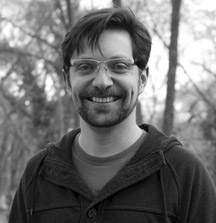
Given Katie Shay's interest in film-making, it is interesting to read about filmmakers and their background. Here is a bio of Ryan Murdock, director of Bronx Obama:

Picture
Ryan is a filmmaker and the creative director of Saving Daylight Productions, which creates documentary media for clients and develops original projects. His recent work has been featured in the New York Times, BBC, MSNBC, and Gawker, among others. He is also a contributor for This American Life.  He recently released his first feature length documentary, Bronx Obama. 

Before starting Saving Daylight, Ryan worked at the PBS science series NOVA, where he produced Musical Minds, a documentary about the effects of music on the brain featuring Dr. Oliver Sacks that critics called "revealing." He recorded over 300 audio interviews for StoryCorps. the NPR oral history project, and launched their podcast in 2007. His work has screened at the IFC Center, DOCNYC, the Imagine Science Film Festival and numerous live performances. Murdock’s directorial debut, Power Surge,  won Best Animation at the 2004 Flicker Film Festival. He holds a B.S. in Radio/TV/Film from Northwestern University and is a graduate of the New York Foundation for the Arts Artist Entrepreneurship Program. He is also a member of the Brooklyn Filmmakers Collective. The New York Times recently said Murdock "defies categorization," which he considers a compliment. 
 
Bronx Obama could be coming to a theater near you in the coming months. If it does, don't miss it. 
 

The Miraculous Tales of Mickey McGuigan

DAY 8: Our second film in the True/False Film Festival was The Miraculous Tales of Mickey McGuigan. Here is a synopsis by the screenwriters:

Do miracles exist? Mickey McGuigan, a 73-year-old Northern Irish farmer turned writer, is going to take us on a journey to find out. Miracles may defy logic, but millions around the world believe in them. In Ireland, it's part of the traditional world of folklore and magic that people hang on to. If your cow's got Ringworm, you call a man with the "cure". He may heal the animal by spitting on it. And if your child won't stop screaming for days, a woman with the "gift" may silence it with the use of a simple piece of string! You'll meet Father Conlan, a Catholic Priest who, though paid as a parish priest, spends all his time healing the sick. There's a 6-month waiting list of people desperate to see him. One day, 38 people turned up at his door, unannounced, hoping to be cured. We'll also encounter John Purcell, a Romany Gypsy, who converted from Catholicism to become a Protestant Evangelist. A fire-and-brimstone preacher, who claims to be able to cure anything. That includes cancer, and hundreds flock to his ministry. Mickey's our guide on this cinematic adventure through a hidden part of rural Northern Ireland, where anything is possible. 

The charm of this film was in its Irish characters, especially Mickey McGuigan himself, whose grizzled face was lit up with Irish mischievousness. The "faith-healers" in this film were not flamboyant characters. They just quietly did their curing ritual when asked. John Purcell was a fiery preacher, but one had to admire the degree to which he had simply given his life over to other people who looked to him for healing. He believed that God had given him a gift, and it was not one that he had sought. He felt obliged to use it for the benefit of others, not himself. None of the healers in this film took money for their "cures."

Mickey McGuigan
As seems to be the case in most True/False films, the filmmaker did not betray a strong bias or agenda.  He  was respectful toward those he filmed and left it to you, the viewer, to decide what you thought and felt about what you were seeing. What I felt mostly was compassion for the people we saw. 

One of the neat things about the True/False Film Festival is that the director of the film is usually on hand to do Q&A after the film, and that was true in this case: Daniel Vernon, who is an award-winning filmmaker, was there and answered questions. We were not able to stay too long, however, because we had to line up to get our Q-number for the next film. If you have tickets for the films, you don't need to Q. We had tickets for films on Saturday and Sunday, but had not been able to get any for Friday, so we had to get in line for all the Friday films. We got into them all.

Another neat aspect of the True/False Film Festival  is the sense it gives you, through repeated exposure to both films and filmmakers, of what is involved in making a film, why people do it, and what a fascinating and arduous process it is. This aspect has added meaning for us because my granddaughter, Katie Shay, seems to be moving toward a career in film-making. She has been admitted to the Film Program at Stephens college. Music is still a strong interest, but seems less likely as a career. Her goal at the moment is to be a cinematographer. So this whole weekend, we were imagining Katie doing this. It was interesting to note that hardly any of the filmmakers we saw were over 30, and several were women. 

Big Decision

DAY ELEVEN:  We had a great weekend with the film festival, and last night Rob made me a wonderful birthday dinner.  It was served in their formal dining room which had just been redecorated. Pretty spiffy! 

Birthday dinner in the dining room


Katie with Gertie
Somewhere along the way I picked up a bug that has given me laryngitis. I'm concerned about something worse developing, and if we go on to Texas, as we planned, every mile will be farther from home, and it's no fun being sick on the road. On the other hand, we would be going into warmer climes, which might be helpful. But you can still be sick in a warmer place. So I'm trying decide what is best - go on, or go home. Stay tuned!

Sunday, March 2, 2014

True/False Film Festival

DAY SEVEN (Thursday, February 27th):  We drove from Bartlett, IL to Columbia, MO, taking I-55 to Springfield, IL and then I-76 to Jacksonville, IL, on to U.S. 54 across the Mississippi River at Louisiana, IL into Missouri, by Mexico, MO and on to Columbia. We went to Stephens College, met Betsey and got our passes to the True/False Film Festival and went to our first film that evening.

Since we did not have tickets for a Thursday film, we went into the fascinating and somewhat complicated "Q" system. The "Q" system seats people who do not have ticket reservations for that film: at each venue there are "x" number of seats unsold, or no-shows. The way it works is this. At the venue for a particular film (there are about eight venues all told), you get in line to get a number for the "Q." A "Q" queen - a flamboyantly dressed woman with a colored wig - manages the line and hands out numbers. The numbers are given out one hour before a movie begins. So you have to stand in line twice. The longer wait is the first one,  to get a number. (We were outside and it was cold, but it wasn't too bad and you talk with people around you.) The earlier you get there, the lower your number will be. Once you have your number, you then have 45 minutes to go off and get something to eat or drink or just walk around. Then fifteen minutes before the film starts, you get in line again, but this time you stand in order of your number and things move quickly - groups are admitted to the showing according to the number of empty seats, 25 or so at a time. Venues vary tremendously in size. The film we saw Thursday evening was Dora Garcia's The Joycean Society, and it was in a very small venue, The Little Ragtag Cinema. We had numbers 26 and 27 and were told that we had a good chance of getting in. So we had a bite to eat at a cafe attached to the theater, then got in line and, indeed, had no trouble getting into the showing.

Ellen in line
Our "Q Queen"
The film was about a group of people, mostly older men, who meet once a week in a small library room in Zurich, Switzerland, to read and discuss the meaning of James Joyce's Finnegan's Wake, a notoriously difficult work to interpret. Here is a paragraph from a review of the film:

The Zurich group shown in The Joycean Society has been reading Finnegans Wake since 1986, taking just over a decade to get through the volume before going back to page one again. They're therefore still quite near the start of what one member wryly terms the "third lap", each hour-long session combing a page or so at a time. Garcia focuses intently on this genial but rigorous example of hermeneutics, a term originally applied to the minute scrutiny of biblical and philosophical texts. The description is eminently applicable here -- as evidenced by the microscopic marginalia glimpsed in the dog-eared volumes that litter the group's table and which reveal a Zodiac-like zeal to penetrate hidden mysteries.

While this sounds like an esoteric film, it actually was quite delightful, with many similarities between this group - which would read a passage aloud and then discuss possible meanings and allusions - and Bible study groups I have been in. Part of the delight was in the faces of the persons around the table, and the varying personalities. A couple were "know-it-alls," others hesitatingly spoke up, and others said nary a word - just like discussion groups we've all been in. Joyce's almost impenetrable text did receive some illuminating insights, and while I've never read Finnegan's Wake, I think I would enjoy being a member of this group. I even found myself wanting to raise my hand and say, "No, I think it means this." 

Friday and Saturday we saw eight more films! This morning (Sunday) is the final day of the festival, but we're getting ice and snow, so we'll see what the day brings. I'll report on the other films as I get the chance - they've all been very interesting and some have been very moving, some provocative, some disturbing. A very fine film festival.